
Mom Brain, Explained: What Pregnancy Really Does to Your Brain
Mom brain is real, and the science is kinder than the jokes. Here's what brain scans show about pregnancy, plus small things that help on foggy days.


Mom brain has a physical basis: pregnancy changes the structure of your brain. Brain scans of hundreds of women before, during and after pregnancy now show how. This post covers what changes, what recovers after birth and what helps on foggy days.
What happens in your brain during pregnancy
In a 2024 study, researchers scanned one first-time mom 26 times, from three weeks before conception to two years after birth. They describe pregnancy hormones such as estrogen and progesterone climbing 100 to 1,000 times higher than usual. The scans showed three changes:
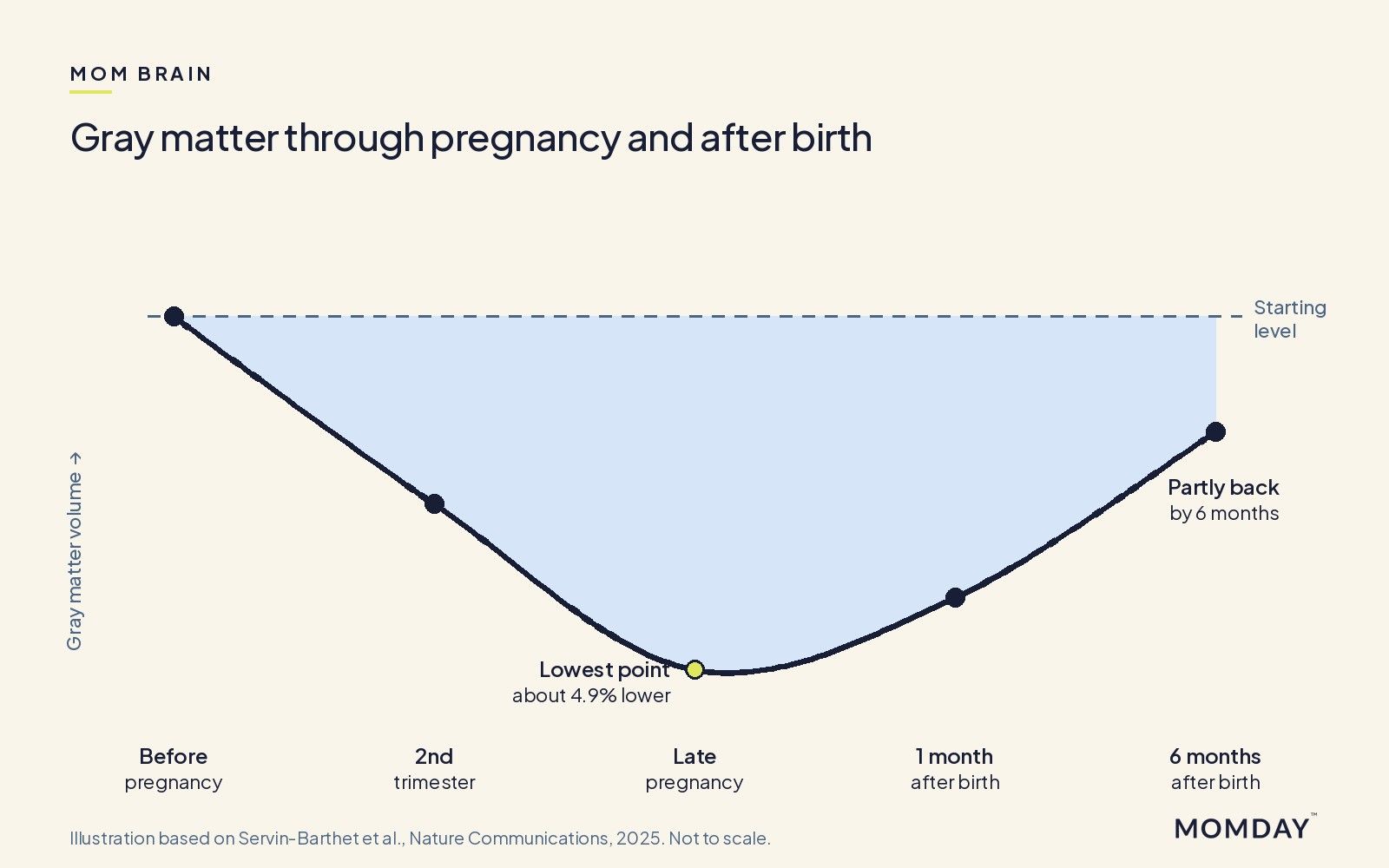
- Gray matter gets a little smaller. Gray matter, found mostly in your brain's outer layer, is packed with nerve cells. Its volume and thickness go down across much of the brain as pregnancy progresses.
- Some wiring gets stronger for a while. White matter is the "cabling" that carries signals between brain areas. It grew stronger in structure through the first two trimesters, then returned to its starting point after birth.
- Gray matter partly comes back. After birth, it starts to recover. In the studies so far, it had not fully returned to its starting point by six months.
Because this study followed one woman, it shows what can happen, not what happens to everyone. Larger studies point the same way.
- 127 first-time moms (2025). A team in Spain scanned 127 women from before pregnancy to six months after birth. Gray matter followed a U-shaped path: about 4.9% lower by late pregnancy, then partly regained by six months. The changes tracked estrogen levels and did not appear in the moms' partners.
- Second-time moms (2026). A team in the Netherlands followed 110 women and found the second pregnancy brings similar but smaller changes in the same brain networks. The researchers describe the brain as being "fine-tuned."
- Memory and thinking (2018). A review of 20 studies with 709 pregnant women found memory and overall thinking scores lower during pregnancy, mostly in the third trimester.
Does mom brain go away?
Partly, and it takes time. Gray matter starts to recover after birth, and the 2026 study suggests that recovery may continue past the first year. Nothing in this research points to damage. Researchers see these changes as the brain adjusting to parenthood. How foggy you feel varies from mom to mom and week to week, and many moms feel sharp the whole way through.
What helps on foggy days
- Write it down. Keep one shared list or phone note for appointments, questions to ask and the grocery run. Let the list do the remembering.
- Rest when you can. A short rest on the couch still counts.
- Get outside for a short walk. Walk alone or with a friend for movement, fresh air and a little company.
- Take a 3-minute breathing reset. Steps below.
- Be patient with yourself. Progress without pressure applies to your brain too.
The 3-minute breathing reset
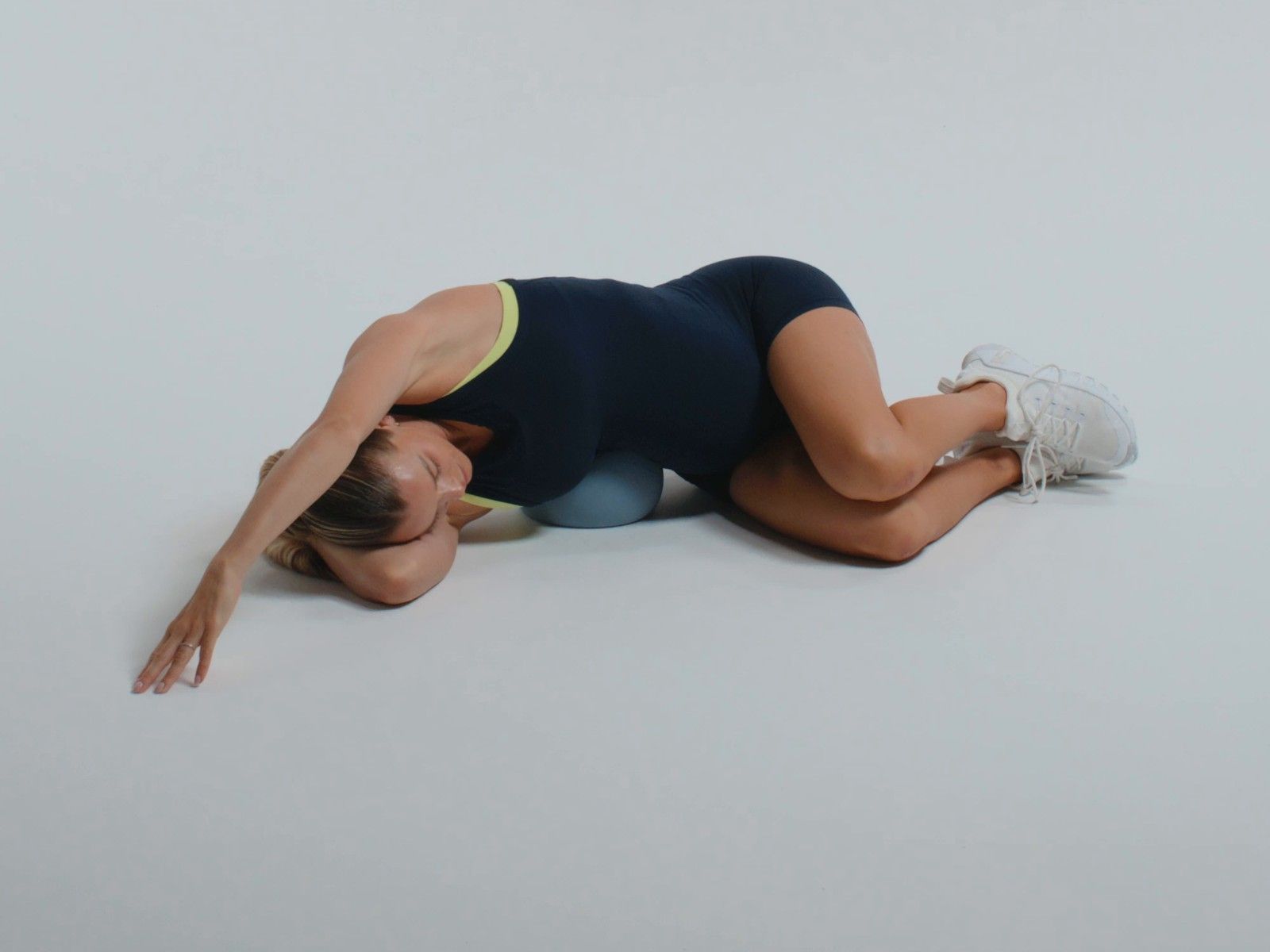
Set up: Lie on your side with your knees bent and your head resting on your lower arm. Place a small ball, a rolled towel or a pillow under the side of your waist and reach your top arm long along the floor.
Breathe: Inhale through your nose for about 4 counts, expanding your top ribs. Exhale slowly through your mouth for about 6 counts.
Focus: Soften your jaw, shoulders and belly a little more on every exhale. If you feel lightheaded, return to your normal breathing.
Time: 3 minutes, or about 15 slow breaths. Switch sides halfway.
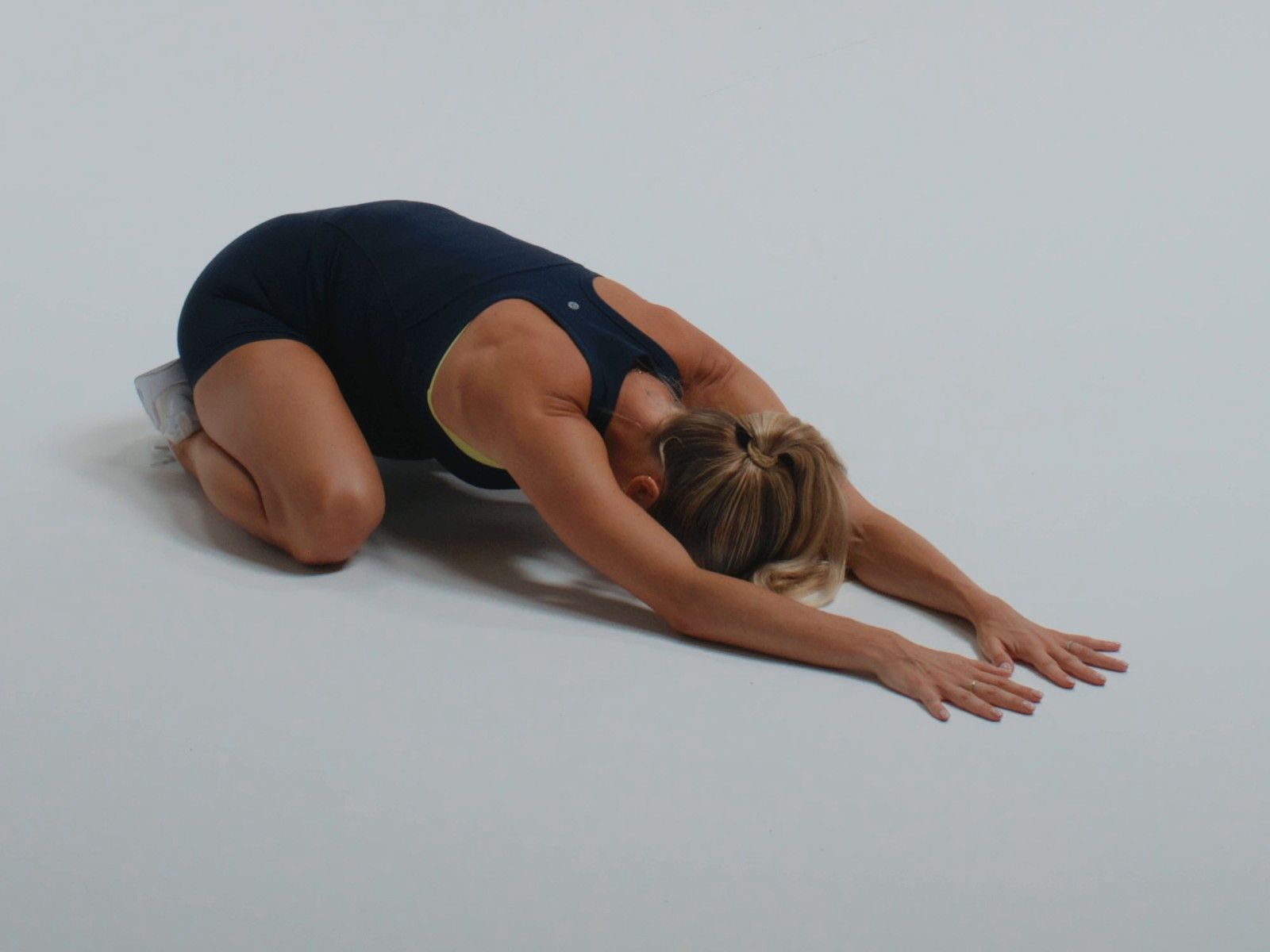
Option: Kneel with your knees as wide as your belly needs and sit back toward your heels. Rest your forehead on the floor or a pillow, arms long. Breathe into your back ribs. If kneeling or lying down is uncomfortable, sit tall in a chair with one hand on your ribs.
The full program is available in the MOMDAY app. Know what to do today, with plans for every trimester and for recovery in stages after birth. Start your 7-day free trial.
When to talk to your primary healthcare provider
If low mood, worry or forgetfulness starts to feel heavy or gets in the way of daily life, tell your primary healthcare provider. You deserve support. In the US, you can also call or text the free, 24/7 National Maternal Mental Health Hotline at 1-833-TLC-MAMA (1-833-852-6262). If you ever have thoughts of hurting yourself or your baby, call 911 right away.
Train the full program in the MOMDAY app. Start your 7-day free trial.
Keep reading
- 7 pelvic floor relaxation stretches for birth prep
- The fundamentals of exercising during pregnancy
- Your first 6 weeks: core and pelvic floor basics after birth
- Returning to exercise after your 6-week check-up
Sources
- Pritschet L, et al. Neuroanatomical changes observed over the course of a human pregnancy. Nature Neuroscience, 2024.
- Servin-Barthet C, et al. Pregnancy entails a U-shaped trajectory in human brain structure linked to hormones and maternal attachment. Nature Communications, 2025.
- Straathof M, et al. The effects of a second pregnancy on women's brain structure and function. Nature Communications, 2026.
- Davies SJ, et al. Cognitive impairment during pregnancy: a meta-analysis. Medical Journal of Australia, 2018.
- Health Resources and Services Administration. National Maternal Mental Health Hotline.
All sources checked November 17, 2026.
About Ella
Ella Dove is the Founder & Head Trainer of MOMDAY and a certified prenatal and postpartum exercise specialist. She programs strength, mobility and birth prep for real life: progress without pressure, built to last. Start your 7-day free trial.
opens in a new tabRelated articles
Total Body Build & Control: My Second Trimester Strength Workout
A full-body second trimester strength session: hinge, lunge, push, press, pull and carry. 12 moves with sets, reps and coaching cues from Ella.
9 min read
7 Pelvic Floor Relaxation Stretches for Birth Prep
Pelvic floor relaxation stretches for birth: 7 moves to lengthen your pelvic floor, hips and inner thighs, with photos, breath cues and a free 18-minute video.
6 min read
Step-by-Step Guide to C-Section Scar Desensitization and Mobilization
Many Moms notice their incision feels tight, numb, tender, or even hypersensitive. Scar sensitivity is common after a c-section, and desensitization can help your nerves calm down, reduce discomfort, and make touch feel normal again. You can usually begin gentle desensitization immediately postpartum as long as we are staying above and below the incision and not directly on the incision. Once your
7 min read
Prolapse Postpartum by Dr. Anya, Pelvic Floor Physical Therapist
If you’re newly postpartum and have heard the word prolapse, chances are it brought on a wave of worry. Maybe you Googled it and now feel overwhelmed—or maybe you’ve felt something that doesn’t feel quite right in your body and are wondering what it means. I’m here to tell you: take a deep breath. You are not broken, a
9 min read
Where to Start With Core Exercises Postpartum: By Dr. Anya
By Dr. Anya, Pelvic Floor Physical Therapist If you’re in the early days, weeks, or even months postpartum, I want to start by saying this: You are doing an incredible job. Whether you had a vaginal delivery, a C-section, an uncomplicated birth, or a challenging one—your body has gone through something monumental. And
8 min read
Understanding and Managing Symphysis Pubis Dysfunction (SPD) During Pregnancy
If you’ve been experiencing pain in your pelvic area during pregnancy, you’re not alone. This condition is super common, and while it can be uncomfortable, there’s a lot you can do to feel better and keep moving confidently through your pregnancy. In this post we dive into what SPD is, why it happens, and how you can manage it. Plus, I’ll share some of my favorite exercises to help you find relief
9 min read